
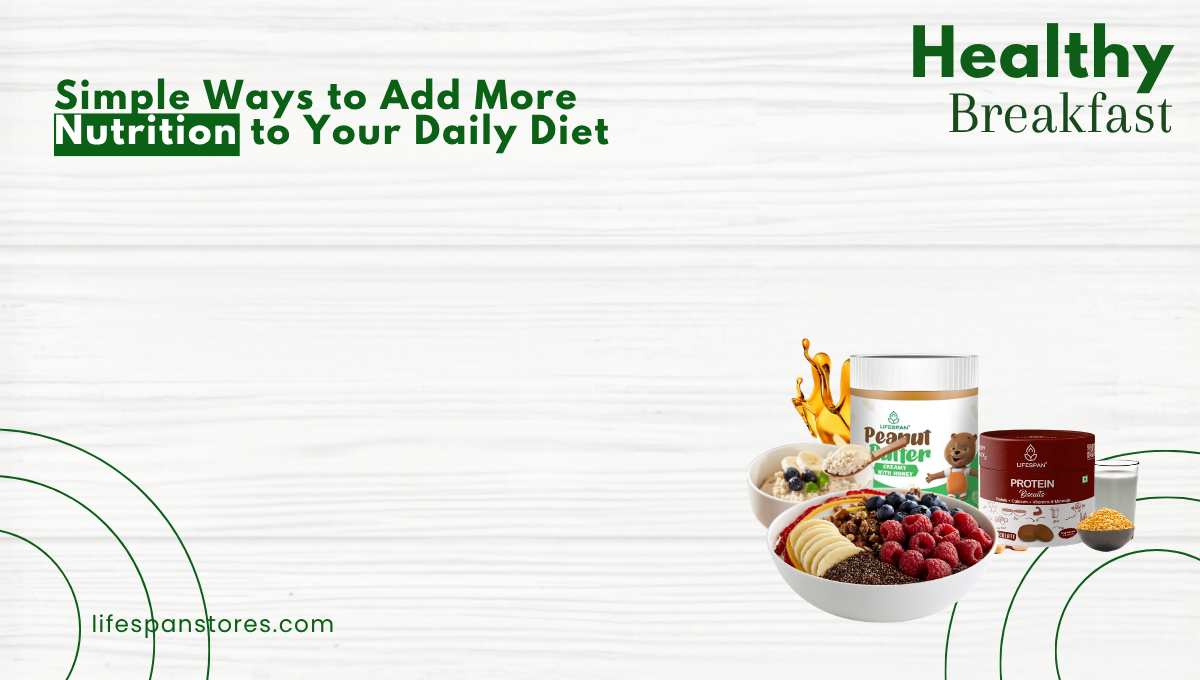
Modern life often makes eating well more difficult than it should be. Busy mornings, school schedules, office commitments, commuting and long working hours can all encourage people to choose whatever food is quickest and most convenient. Healthy Breakfast may become a cup of tea and a biscuit, while snacks may consist of highly processed foods that are convenient but not necessarily satisfying or nutrient-dense.
However, healthy eating does not have to mean complicated recipes, expensive ingredients or strict diets. Small, practical changes can make everyday meals and snacks more nutritious.
A balanced eating pattern should provide a combination of carbohydrates, protein, healthy fats, fibre, vitamins and minerals. According to the World Health Organization (WHO), healthy diets are built around four principles: adequacy, balance, moderation and diversity. ICMR-NIN’s Dietary Guidelines for Indians similarly emphasize eating a variety of foods from different food groups rather than depending on a single food for nutrition.
From building a better breakfast to choosing smarter snacks, adding fibre and making room for nutritious foods such as peanuts, there are several simple ways to improve everyday eating habits.
Healthy Breakfast Ideas for Busy Mornings
Breakfast does not need to be elaborate to be nutritious.
For many people, the biggest challenge is not knowing what constitutes a healthy breakfast but finding the time to prepare one. A useful approach is to combine foods from different food groups instead of relying on one food alone.
A balanced breakfast can include:
- A whole-grain or minimally processed cereal
- A protein source
- Fruit or vegetables
- Nuts or seeds
- Milk, curd or another suitable source of nutrition
For example, oats with milk, fruit and nuts can provide a combination of carbohydrates, protein, fibre and healthy fats. Vegetable poha with peanuts, idli with sambar, vegetable upma with curd, or whole-grain toast with peanut butter and fruit can also be practical options.
Quick breakfast combinations
Oats + milk + fruit + nuts: This is one of the simplest combinations for a busy morning. Oats provide carbohydrates and fibre, while milk contributes protein and other nutrients. Fruit adds vitamins and minerals, while nuts contribute healthy fats and additional nutrients.
Vegetable poha + peanuts: Poha can be combined with vegetables and peanuts to make a more balanced meal. Adding vegetables increases variety, while peanuts contribute protein and healthy fats.
Idli + sambar: Traditional Indian breakfasts can be highly nutritious when appropriately balanced. Idli provides carbohydrates, while sambar contributes pulses and vegetables.
Whole-grain toast + peanut butter + fruit: For extremely busy mornings, this combination can be prepared within minutes. Peanut butter can add flavour, protein and fat to the meal, while fruit contributes fibre and micronutrients.
Curd + fruit + seeds: Plain curd combined with fruit and a small amount of seeds can make a convenient breakfast or light meal.
The important point is that there is no single “perfect” breakfast. The best breakfast is one that fits your nutritional needs, food preferences, schedule and overall diet.
WHO recommends obtaining carbohydrates primarily from whole grains, vegetables, fruits and pulses rather than relying heavily on refined sources.
What Is Your Favourite Healthy Breakfast?
Healthy eating becomes easier when nutritious foods are also enjoyable.
Instead of thinking of breakfast as a fixed menu, consider creating a rotation of options. This prevents boredom and makes it easier to maintain healthy eating habits over time.
Some popular choices include:
- Idli with sambar
- Vegetable dosa with chutney
- Vegetable poha
- Upma with vegetables
- Oats with fruit and nuts
- Millet-based breakfast dishes
- Whole-grain toast with peanut butter
- Vegetable sandwiches
- Eggs with whole-grain toast, for those who eat eggs
- Plain curd with fruit, nuts and seeds
The key is to look at the overall combination, rather than labelling one food as “healthy” or “unhealthy.”
For example, a bowl of oats can become more balanced when paired with fruit, nuts and a protein source. Similarly, a traditional breakfast can become more nutrient-dense when vegetables, pulses, curd or nuts are included.
ICMR-NIN recommends a varied diet containing foods from different food groups because no single food provides all essential nutrients. Its guidance also describes a healthy meal as one that can include vegetables, whole grains, pulses or beans, modest portions of nuts or seeds, fruit and plain fermented yoghurt or curd.
So, what is your favourite healthy breakfast? The answer may be different for everyone—and that is perfectly fine.
Smart Snacking: What Should You Look For?
Snacking is not necessarily unhealthy.
A snack can be useful when there is a long gap between meals or when someone needs a convenient source of nourishment. The problem is that many commonly available snacks are high in refined carbohydrates, added sugars, sodium or unhealthy fats while providing relatively little nutritional value.
Smart snacking means looking beyond taste and convenience.
Look for these qualities when choosing a snack:
- Protein: Protein can contribute to satiety and is important for maintaining and repairing body tissues. Depending on dietary preferences, protein can come from pulses, legumes, dairy, eggs, nuts, seeds and other foods.
- Fibre: Fibre is naturally present in foods such as fruits, vegetables, whole grains, pulses, nuts and seeds. It is an important component of a healthy diet.
- Lower added sugar: Check the ingredient list and nutrition information rather than relying only on words such as “healthy” or “natural” on the front of a package.
- Appropriate portion size: Even nutritious foods can contribute substantial calories when eaten in excessive quantities. Portion awareness is therefore important.
- Ingredient quality: Look for foods made with useful ingredients and avoid making highly processed snacks the foundation of your daily diet.
- Variety: Rotate between fruits, nuts, roasted pulses, yoghurt, whole-grain foods and other nutritious choices instead of eating the same snack every day.
ICMR-NIN specifically lists fruit or vegetable salads with seeds or nuts, yoghurt, roasted or boiled beans, chickpeas and peanuts among examples of nutritious snack choices.
A Simple Way to Make Your Snack More Nutritious
One of the easiest approaches to improving a snack is to add rather than simply remove.
Instead of completely changing what you enjoy eating, think about what nutritious ingredient can be added to it.
For example:
- Add nuts or seeds to yoghurt.
- Add fruit to oats.
- Add vegetables to a sandwich.
- Pair whole-grain crackers with a protein-rich food.
- Add peanut butter to whole-grain toast.
- Combine roasted chickpeas with vegetables.
- Add fruit alongside a convenient packaged snack.
- Choose a protein-containing snack when you need something between meals.
This approach is practical because healthy eating does not require perfection.
Suppose someone normally reaches for biscuits in the afternoon. Instead of suddenly eliminating snacks altogether, they could choose a more nutrient-conscious option or pair the snack with fruit, nuts or another wholesome food.
For people looking for convenient packaged options, Lifespan currently offers products such as Protein Biscuits, Whey Protein Biscuits, Multigrain Biscuits and Lifespan Peanut Butter. Product formulations should always be checked on the current packaging because ingredients and nutritional information can change.
For example, Lifespan Protein Biscuits are described by the brand as a source of protein and are available in chocolate and vanilla flavours. The product page states that they are made without refined sugar, maida or added preservatives.
Lifespan Whey Protein Biscuits provide 7.99 g of whey protein per stated serving of three biscuits, according to the current product information.
These types of products can be considered as convenient snack options, but they should complement—not replace—a varied diet based largely on whole and minimally processed foods.
Why Fibre Is an Important Part of a Balanced Diet
Fibre is one of the nutrients that is often overlooked when people think about healthy eating.
Dietary fibre is found naturally in plant foods, including fruits, vegetables, whole grains, pulses, nuts and seeds. Unlike many nutrients, fibre passes through parts of the digestive system without being completely digested.
There are different types of dietary fibre, and they can have different physiological effects.
Soluble fibre: Soluble fibre can dissolve or disperse in water and is found in foods such as oats, legumes, fruits and some vegetables.
Insoluble fibre: Insoluble fibre does not dissolve in water and is found in foods including whole grains, vegetables and the skins of many fruits.
Many whole foods contain a mixture of different fibres, which is one reason dietary variety is important.
How can fibre support a healthy diet?
A fibre-rich eating pattern can support:
- Normal digestive function
- Regular bowel movements
- Greater meal satisfaction
- A healthier overall dietary pattern
- Better intake of plant-based foods
WHO’s current guidance recommends that people aged 10 years and older consume at least 25 grams of naturally occurring dietary fibre per day, with lower recommended minimum amounts for younger children. WHO also recommends obtaining carbohydrates primarily from whole grains, vegetables, fruits and pulses.
ICMR-NIN likewise emphasizes whole grains, pulses, vegetables, fruits, nuts and seeds as components of a balanced Indian diet.
Easy ways to increase fibre
You do not necessarily need a dramatic dietary change.
Try:
- Choosing whole grains more often
- Including vegetables in lunch and dinner
- Eating whole fruits instead of relying mainly on juices
- Including dals, beans and chickpeas
- Adding nuts and seeds to meals
- Choosing fibre-containing breakfast options
- Including millets and other whole grains where appropriate
When increasing fibre intake, it is sensible to do so gradually and maintain adequate fluid intake, particularly if your current intake is low.
Multi Fiber Protein: A Smarter Addition to Your Daily Routine
The combination of protein and fibre is increasingly relevant for people looking for more satisfying everyday food choices.
Protein plays an important structural and functional role in the body. It is needed for tissues, enzymes, hormones and many physiological processes. Fibre, meanwhile, supports digestive health and is associated with the consumption of nutrient-rich plant foods.
The phrase “multi-fiber protein” can therefore be understood as a nutrition concept that combines protein with multiple fibre sources or a product designed to provide both protein and fibre.
However, it is important not to assume that every product marketed with terms such as “high protein” or “high fibre” is automatically appropriate for everyone.
What should you check?
When considering a protein-and-fibre food or supplement, check:
Protein content: Look at how much protein is provided per serving rather than relying only on the product name.
Fibre content: Compare the amount of dietary fibre per serving and consider how it fits into your total daily intake.
Sugar: A product can contain protein and fibre while still being relatively high in added sugars.
Sodium: This is especially relevant when consuming multiple packaged foods throughout the day.
Ingredients: Review the ingredient list to understand the primary components of the product.
Serving size: Nutritional values are generally based on a specified serving, so consuming more than one serving changes the nutritional intake.
Protein and fibre should be viewed as parts of the bigger dietary picture. A balanced diet still requires vegetables, fruits, grains, pulses, healthy fats and other nutrient sources.
For example, Lifespan’s current range includes protein biscuits and multigrain biscuits. The Multigrain Biscuits product information describes the product as providing protein, calcium, iron and fibre and lists ingredients including finger millet, maize, pearl millet, sorghum, Bengal gram and ground nut.
Such products may be useful as convenient additions to an eating routine, particularly when whole-food options are not practical, but they should not be treated as substitutes for a varied diet.
People with specific medical conditions, allergies, digestive disorders or prescribed dietary requirements should consult a qualified healthcare professional or registered dietitian before making significant dietary changes.
National Peanut Day: Creamy Taste Meets Everyday Nutrition
Peanuts are a familiar ingredient in Indian households and are used in snacks, chutneys, sweets, breakfast foods and many traditional recipes.
They are technically legumes, but nutritionally they are commonly grouped with nuts because of their nutrient profile and culinary use.
Peanuts provide protein, unsaturated fats, fibre and several vitamins and minerals. They can therefore be a useful part of a balanced diet when consumed in appropriate portions.
Why are peanuts useful?
Protein: Peanuts contribute plant-based protein, making them useful in meals and snacks, particularly for people who include more plant foods in their diet.
Healthy fats: Peanuts contain predominantly unsaturated fats. WHO recommends favouring unsaturated fats over saturated and trans fats within a healthy dietary pattern.
Fibre: Whole peanuts contain dietary fibre, which can contribute to overall fibre intake.
Micronutrients: Peanuts provide a range of micronutrients, although the exact nutritional contribution depends on portion size and the individual’s overall diet.
Peanut butter as a convenient option
Peanut butter can make it easier to incorporate peanuts into everyday meals.
It can be spread on whole-grain toast, added to oats, mixed into smoothies or paired with fruit.
Lifespan currently lists its Peanut Butter in a 340 g pack, with the website showing a creamy-with-honey option.
When selecting peanut butter, however, consumers should check the nutrition label and ingredient list. Products can vary considerably in their added sugar, salt and oil content.
A simple serving of peanut butter can turn an otherwise basic snack into a more substantial combination when paired with whole grains or fruit.
Peanut allergy matters
Peanuts are also one of the foods capable of causing serious allergic reactions in susceptible individuals.
Anyone with a known peanut allergy should avoid peanut-containing products and carefully check food labels for allergen information. Parents and caregivers should also take food allergies seriously when preparing snacks for children.
National Peanut Day is therefore a good opportunity not simply to celebrate the creamy taste of peanut butter, but also to understand how peanuts can fit into a balanced diet.
Vinayaka Chathurthi: Celebrating Tradition with Mindful Eating
Indian festivals are closely connected with food, family and tradition.
Vinayaka Chathurthi, dedicated to Lord Ganesha, is celebrated with prayers, gatherings and traditional preparations. Foods such as modak, ladoos, sundal and other regional festive dishes are often part of the celebration.
Festival foods do not have to be viewed as completely separate from healthy eating.
The goal is balance rather than restriction.
Traditional foods can be enjoyed while paying attention to portion sizes and the overall day’s food intake.
A few mindful festive eating habits
Enjoy traditional foods in reasonable portions
Festival foods are often richer than everyday meals. Smaller portions allow you to enjoy them without turning one meal into excessive consumption.
Balance the rest of the meal: If one part of the meal is particularly rich, include vegetables, fruits, pulses or other lighter foods elsewhere.
Stay hydrated: Water should remain the primary source of hydration for most people. Excessively sugary drinks can add substantial free sugar to the diet.
Avoid unnecessary grazing: Festivals can involve food being available throughout the day. Eating mindfully rather than continuously can help with portion awareness.
Keep traditional recipes diverse: Ingredients such as sesame, coconut, peanuts, pulses, fruits and grains can contribute different nutrients depending on the recipe.
Remember that celebrations are also about culture
Healthy eating does not mean removing the joy from festivals. Food is an important part of cultural traditions and family gatherings. Mindful portions and overall balance can allow people to enjoy festive foods while maintaining sensible eating habits.
WHO emphasizes that healthy diets should also take cultural context, food preferences and locally available foods into consideration.
Building a Healthier Daily Routine One Choice at a Time
Healthy eating does not have to begin with a complete lifestyle overhaul.
A better approach is to make small changes that are realistic enough to maintain.
You could begin by:
- Eating a more balanced breakfast.
- Including a source of protein in meals and snacks.
- Increasing vegetables and fruits.
- Choosing whole grains more frequently.
- Including pulses, beans, nuts and seeds.
- Paying attention to fibre intake.
- Checking nutrition labels on packaged foods.
- Limiting foods high in added sugars, sodium and unhealthy fats.
- Drinking enough fluids.
- Keeping portion sizes appropriate to your needs.
The WHO’s current healthy-diet guidance emphasizes adequacy, balance, moderation and diversity, while ICMR-NIN similarly recommends obtaining nutrients through a variety of foods rather than depending on a single product or food.
The Bottom Line
Breakfast and snacks may seem like small parts of the day, but they can make a meaningful contribution to overall dietary quality.
A nutritious breakfast can provide a strong start to the day. A smart snack can help bridge the gap between meals. Fibre-rich foods can support a healthy dietary pattern, while protein can contribute to maintaining body tissues and making meals more satisfying.
Foods such as fruits, vegetables, whole grains, pulses, nuts, seeds, curd and other minimally processed foods should form the foundation of everyday eating. Convenient products such as protein or multigrain biscuits can have a place within that pattern when their nutrition information and portion sizes are considered carefully.
And healthy eating does not mean giving up the foods you enjoy. Whether it is creamy peanut butter, a favourite breakfast, a traditional snack or a festive modak during Vinayaka Chathurthi, the larger picture matters most.
Choose variety. Watch portions. Read labels. Add more nutrient-rich foods—and make healthy eating practical enough to enjoy every day.