
Why Is Ashwagandha Getting So Much Attention?
Wellness conversations have changed significantly in recent years. People are increasingly interested in understanding the ingredients behind the foods, beverages and supplements they consume rather than simply choosing products based on marketing claims.
One ingredient that has attracted considerable attention is Ashwagandha.
Known scientifically as Withania somnifera, Ashwagandha is a plant with a long history of use in Ayurveda. Today, it can be found in various forms, including powders, extracts, capsules and food products.
Its popularity is often associated with conversations around stress, sleep, energy, physical performance and general wellness. At the same time, growing interest in an ingredient makes it even more important to understand what research actually tells us.
Ashwagandha should not be viewed as a miracle ingredient or a replacement for healthy lifestyle habits. Instead, it is better understood as one botanical ingredient that may have a place within a broader approach to nutrition and wellness.
Lifespan incorporates Ashwagandha into selected products, including its Whey Protein Biscuits, which combine whey protein with botanical ingredients such as cinnamon, banaba, amla and Ashwagandha. The product information states that three biscuits provide 7.99 g of whey protein.
So, what exactly is Ashwagandha? Why is it used? What does science say about it? And what should you know before consuming a food or supplement containing it?
Let’s take a closer look.
What Is Ashwagandha?
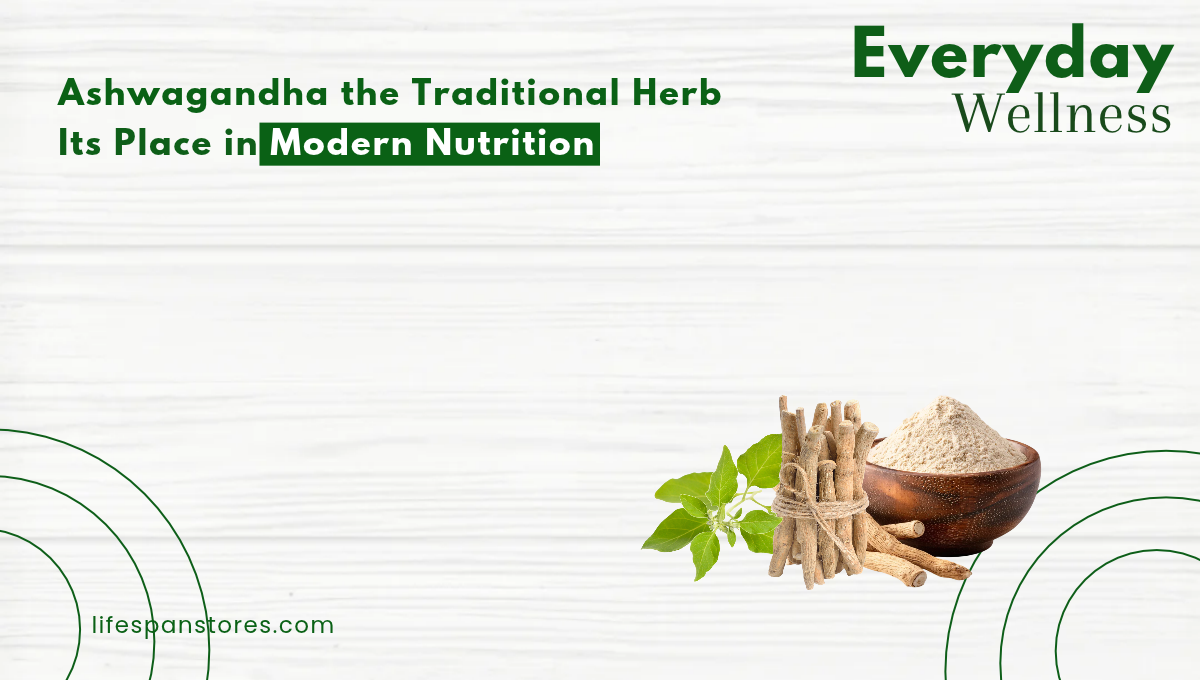
Ashwagandha is an evergreen shrub traditionally associated with Ayurvedic medicine. Its botanical name is Withania somnifera, and it is sometimes referred to as Indian ginseng, although it is botanically different from true ginseng.
The plant contains several naturally occurring compounds, including a group known as withanolides. These compounds are among the components being studied by researchers to understand the plant’s biological properties.
Historically, different preparations of Ashwagandha have been used in traditional wellness practices. Modern products may use Ashwagandha root, leaf, or extracts derived from the plant.
This distinction is important because not every Ashwagandha product is the same.
Different products may use:
- Root powder
- Root extract
- Root and leaf extract
- Different extraction processes
- Different concentrations of active compounds
- Different serving sizes
Therefore, research conducted on a particular Ashwagandha extract should not automatically be assumed to apply equally to every food or supplement containing the herb.
Ashwagandha and Traditional Wellness
Ashwagandha has a long history in traditional Ayurvedic practices.
Traditionally, it has been used as part of approaches focused on maintaining strength, vitality and resilience. Its historical use is one reason it remains an important botanical ingredient in modern wellness products.
However, traditional use and modern clinical evidence are not the same thing.
Traditional knowledge can provide useful starting points for research, but modern scientific studies are needed to determine whether a particular preparation produces a measurable benefit, at what dose, for which people, and over what period.
This distinction helps consumers approach herbal ingredients with both appreciation and appropriate caution.
What Does Modern Research Say About Ashwagandha?
The National Center for Complementary and Integrative Health (NCCIH) has reviewed the evidence surrounding Ashwagandha.
According to NCCIH, some research suggests that certain Ashwagandha preparations may be helpful for stress and insomnia. However, many clinical studies have been relatively small and have used different Ashwagandha preparations.
This creates an important limitation when interpreting the available research.
For example, if a study investigates a concentrated root extract, its findings cannot automatically be applied to a biscuit or other food containing a smaller quantity of Ashwagandha.
Research has also examined Ashwagandha in relation to areas such as anxiety, athletic performance, testosterone and reproductive health. However, the level of evidence varies, and NCCIH notes that there is insufficient evidence to establish benefits for several other health conditions.
Therefore, responsible nutrition communication should avoid presenting Ashwagandha as a treatment or cure.
Instead, it is more accurate to say that some Ashwagandha preparations are being studied for their potential role in stress and sleep, while further research is needed.
Ashwagandha and Everyday Stress
Stress is a normal part of life.
Work deadlines, examinations, financial responsibilities, family commitments, travel and changes in routine can all contribute to temporary stress.
Healthy stress management does not depend on one ingredient or product. A broader lifestyle approach may include:
- Regular physical activity
- Adequate sleep
- Balanced nutrition
- Time outdoors
- Relaxation activities
- Social connections
- Healthy work-life boundaries
- Professional support when necessary
Some research has investigated whether particular Ashwagandha preparations can influence perceived stress. The results are promising enough to justify continued research, but they should not be interpreted as proof that every Ashwagandha-containing product will reduce stress.
This is particularly important when comparing a concentrated supplement extract with a food product containing Ashwagandha as one of several ingredients.
Can Ashwagandha Support Better Sleep?
Sleep is an important component of physical and mental well-being.
Adults generally need adequate, consistent sleep to support concentration, mood, daily functioning and overall health. Poor sleep may be associated with many lifestyle and health factors.
Some research has examined Ashwagandha preparations in people experiencing sleep difficulties. NCCIH reports that certain preparations may be effective for insomnia, although the evidence base has limitations.
However, Ashwagandha should not be considered a universal solution for sleep problems.
If someone regularly struggles to fall asleep, wakes frequently during the night, snores heavily, experiences breathing interruptions during sleep, or remains exhausted despite adequate time in bed, it is important to investigate the underlying issue rather than relying only on a wellness ingredient.
Good sleep habits remain fundamental.
Try maintaining a consistent bedtime, reducing unnecessary screen stimulation before sleep, keeping the bedroom comfortable and allowing enough time for rest.
Understanding Ashwagandha in Lifespan Whey Protein Biscuits
Lifespan’s Whey Protein Biscuits (200 gm) are designed as a convenient protein-focused snack. According to the current product information, a serving of three biscuits provides 7.99 g of whey protein. The formulation also includes botanical ingredients such as cinnamon, banaba, amla and Ashwagandha.
Explore Lifespan Whey Protein Biscuits
This makes the product particularly relevant to the conversation around functional snacking: it combines a familiar biscuit format with protein and selected botanical ingredients.
Why Is This Combination Interesting?
A modern snack can serve a practical purpose when it fits into an individual’s overall eating pattern.
For example, someone may want a convenient snack between meals, after physical activity, while travelling, or during a busy working day.
The whey protein component provides a source of dietary protein, while the formulation includes several plant-derived ingredients.
However, the presence of Ashwagandha does not mean the biscuit should be considered an Ashwagandha treatment.
The most appropriate way to understand the product is as a protein-containing food that includes Ashwagandha as one of its ingredients.
This distinction is important for responsible nutrition education.
Ashwagandha Is Not the Only Ingredient That Matters
When choosing a food or wellness product, it can be tempting to focus on one popular ingredient.
But nutrition is rarely about one ingredient in isolation.
The overall formulation, serving size, protein content, dietary pattern and individual nutritional needs all matter.
Lifespan’s Whey Protein Biscuits, for example, combine whey protein with ingredients including cinnamon, banaba, amla and Ashwagandha.
Whey Protein: Whey is a milk-derived protein containing amino acids. Adequate protein intake is important for normal muscle maintenance and many other physiological processes.
The Lifespan product provides 7.99 g of whey protein per three-biscuit serving according to its current product information.
Cinnamon: Cinnamon is a familiar culinary spice used in many cuisines. It contributes flavour and contains naturally occurring plant compounds.
Its presence in a food product should not be interpreted as evidence that the product treats a medical condition.
Banaba: Banaba, or Lagerstroemia speciosa, is a plant traditionally used in parts of Asia. Its leaves contain naturally occurring compounds that have been investigated in scientific research.
Again, research involving a concentrated compound or extract cannot automatically be applied to the quantity present in a particular food.
Amla: Amla, commonly known as Indian gooseberry, has a long history in Indian food traditions.
It is naturally associated with vitamin C and various plant compounds and is commonly incorporated into traditional foods and wellness preparations.
Ashwagandha: Ashwagandha brings a traditional botanical ingredient into the formulation. Its compounds, particularly withanolides, have been the subject of modern research.
The important point is that each ingredient contributes to the overall formulation, and consumers should consider the product as a whole.
Other Lifespan Products Featuring Ashwagandha
Ashwagandha is not limited to one Lifespan product.
The current Lifespan website also lists Ashwagandha among the botanical ingredients in Dialite Biscuits and Memory Protein Biscuits.
The Memory Protein Biscuits product information lists ingredients including cinnamon, amla, Ashwagandha and ginkgo, while the Dialite Biscuits page describes a combination of cinnamon, banaba, amla and Ashwagandha.
This illustrates an important concept in modern nutrition: botanical ingredients can be incorporated into functional foods alongside proteins, vitamins, minerals and other nutritional components.
However, consumers should always check the latest packaging and nutrition panel because formulations, serving sizes and ingredient declarations can change.
Who Should Be Careful With Ashwagandha?
“Natural” does not automatically mean “appropriate for everyone.”
NCCIH reports that Ashwagandha may cause side effects in some people, including:
- Drowsiness
- Stomach discomfort
- Diarrhoea
- Vomiting
There have also been rare reports linking Ashwagandha supplements with liver injury.
NCCIH advises avoiding Ashwagandha during pregnancy and breastfeeding and does not recommend it for people with autoimmune or thyroid disorders or those preparing for surgery.
It may also interact with certain medicines, including some used for diabetes, high blood pressure, thyroid conditions, seizures and immune suppression, as well as sedative medicines.
Therefore, people who fall into these categories should speak with an appropriate healthcare professional before consuming products containing Ashwagandha regularly.
Food Product vs Supplement: Why the Difference Matters
One of the most common mistakes in nutrition discussions is assuming that all products containing the same ingredient work in the same way.
They do not.
A concentrated herbal extract in a supplement can have a very different amount of an active compound compared with a food product containing the herb as one component of a broader formulation.
For this reason, consumers should not take the results of a clinical trial using a specific Ashwagandha extract and assume that consuming any food containing Ashwagandha will produce identical results.
This is especially important when discussing health outcomes such as anxiety, insomnia, hormonal changes or athletic performance.
Responsible wellness decisions begin with understanding the ingredient, the form, the amount and the purpose of the product.
How Can Ashwagandha Fit Into a Balanced Lifestyle?
The best approach is to think about wellness as a complete picture.
Instead of asking, “What single ingredient can make me healthier?”, consider:
- Am I eating a varied diet?
A balanced diet should provide a variety of foods and nutrients rather than relying heavily on one product.
- Am I getting enough protein?
Protein can come from dairy, eggs, pulses, beans, fish, meat, nuts, seeds and other foods. A protein-containing snack can complement the diet when appropriate.
- Am I physically active?
Regular movement is important for general health. Walking, cycling, swimming, strength training and other suitable activities can all contribute to an active lifestyle.
- Am I sleeping adequately?
No supplement can compensate indefinitely for inadequate sleep.
- Am I managing stress in healthy ways?
Relaxation, exercise, hobbies, social connections and professional support can all play a role.
- Do I understand what I am consuming?
Reading the ingredient list, serving size, allergen information and nutrition panel is an important part of informed food selection.
A Simple Everyday Wellness Approach
If you are interested in incorporating more purposeful nutrition into your routine, keep the approach simple.
Morning: Start with a balanced breakfast and adequate hydration.
During work: Take movement breaks and avoid sitting continuously for long periods.
Between meals: If you need a snack, choose an option that fits your nutritional requirements rather than eating simply out of habit.
After activity: Include an appropriate source of protein and other nutrients according to your overall diet.
Evening: Create time for relaxation through music, walking, reading, hobbies or spending time with family.
Night: Prioritise consistent, adequate sleep.
A product containing Ashwagandha can be considered within this larger lifestyle framework—but it should never replace the fundamentals.
How to Read an Ashwagandha Product Label
Whether you are purchasing a supplement or a food product containing Ashwagandha, take a few moments to examine the label.
Look for:
Ingredient name: Is it listed as Ashwagandha or Withania somnifera?
Form: Is it a powder, extract, root preparation or part of a food formulation?
Serving size: How much product constitutes one serving?
Complete ingredient list: What other ingredients are included?
Allergen information: Does the product contain milk, nuts or other potential allergens?
Usage instructions: Is there a clearly stated recommended serving?
Warnings: Are there specific precautions?
Manufacturer information: Is there adequate information about the company responsible for the product?
Lifespan advises customers to read product labels, nutritional information, ingredient lists and usage instructions and to consult a qualified healthcare professional before starting supplements, particularly during pregnancy, breastfeeding, medication use or existing medical conditions.
Ashwagandha and the Bigger Picture of Preventive Wellness
The growing popularity of Ashwagandha reflects a broader shift toward preventive health and informed nutrition.
People increasingly want to understand how food, lifestyle and traditional ingredients can fit into their everyday routines.
That interest can be positive when it encourages consumers to:
- Read labels carefully
- Ask questions
- Learn about ingredients
- Maintain healthy eating patterns
- Stay physically active
- Prioritise sleep
- Seek professional healthcare when necessary
At Lifespan, the company’s stated approach is to combine science-backed nutrition with traditional wellness concepts and make health and nutrition more accessible to families.
This philosophy aligns with a simple principle: wellness does not have to be complicated.
Small, informed choices made consistently can contribute to a healthier lifestyle.
Frequently Asked Questions About Ashwagandha
- What is Ashwagandha?
Ashwagandha is a botanical plant scientifically known as Withania somnifera. It has a long history of use in Ayurveda and contains naturally occurring compounds called withanolides.
- What is Ashwagandha traditionally used for?
Ashwagandha has traditionally been used in Ayurvedic wellness practices. Modern research is examining various potential applications, particularly in areas such as stress and sleep.
- Does Ashwagandha reduce stress?
Some studies of specific Ashwagandha preparations suggest potential benefits for stress. However, research is still limited, and results from concentrated extracts cannot automatically be applied to every food or product containing Ashwagandha.
- Does Lifespan use Ashwagandha in its products?
Yes. The current Lifespan website lists Ashwagandha as one of the botanical ingredients in products including Whey Protein Biscuits, Dialite Biscuits and Memory Protein Biscuits.
- How much whey protein is in Lifespan Whey Protein Biscuits?
According to the current product information, three Lifespan Whey Protein Biscuits provide 7.99 g of whey protein.
- Is Ashwagandha safe for everyone?
No. Ashwagandha may not be appropriate for everyone. NCCIH advises against its use during pregnancy and breastfeeding and recommends caution or avoidance in people with certain thyroid or autoimmune conditions and before surgery. It can also interact with some medicines.
- Can a biscuit containing Ashwagandha replace an Ashwagandha supplement?
Not necessarily. Different products contain different forms and quantities of Ashwagandha. A food containing Ashwagandha should not automatically be considered equivalent to a concentrated herbal supplement.
Final Thoughts: Understand the Ingredient, Not Just the Trend
Ashwagandha has moved from traditional wellness practices into modern nutrition conversations, but understanding an ingredient is more valuable than simply following a trend.
Its long history in Ayurveda provides an interesting foundation, while modern research continues to explore its potential role in areas such as stress and sleep.
At the same time, the available evidence has limitations. Different preparations can contain different concentrations and combinations of compounds, and not every product containing Ashwagandha should be expected to produce the same effects.
For Lifespan consumers, Ashwagandha can be understood as one component of selected functional food formulations, including Whey Protein Biscuits, Dialite Biscuits and Memory Protein Biscuits. These products should be viewed in the context of an overall balanced diet and healthy lifestyle—not as medicines or replacements for professional healthcare.
The most useful approach to wellness is a balanced one:
Eat thoughtfully. Move regularly. Sleep adequately. Manage stress. Understand your nutrition. Read labels. And seek professional advice when you need it.
When it comes to health, informed choices are always better than exaggerated promises.
Health Disclaimer
This article is intended for general health and nutrition awareness and does not constitute medical advice, diagnosis or treatment. The information about Ashwagandha is based on currently available evidence and may not apply equally to every preparation or product. Product formulations and nutritional information may change, so consumers should refer to the latest product packaging and official product page before use. Individuals who are pregnant or breastfeeding, taking medication, preparing for surgery, or managing an existing health condition should consult a qualified healthcare professional before consuming products containing Ashwagandha.