
In the middle of a busy day, feeling tired can seem completely normal. Work, studies, commuting, exercise, household responsibilities and poor sleep can all affect how energetic we feel. But nutrition is another important part of the equation—and one nutrient that deserves attention is vitamin B12.
Vitamin B12 is a water-soluble vitamin that the body needs for several essential functions. It contributes to normal red blood cell formation, supports the nervous system, participates in DNA production and helps the body carry out normal energy-yielding metabolism. The National Institutes of Health (NIH) Office of Dietary Supplements (ODS) identifies vitamin B12 as an important nutrient for healthy blood and nerve cells and DNA synthesis.
Although B12 is often marketed as an “energy vitamin,” there is an important distinction. Vitamin B12 does not provide an instant energy boost like caffeine. Rather, adequate B12 is necessary for normal metabolic and blood-forming processes. If someone is deficient, correcting the deficiency can help address symptoms associated with it, including tiredness and lack of energy.
For people interested in maintaining everyday wellness, understanding where B12 comes from, how the body uses it, who may be at risk of inadequate intake and when supplementation may be appropriate can make nutritional choices more informed.
What Is Vitamin B12?
Vitamin B12, also called cobalamin, belongs to the B-vitamin family. It is water-soluble, meaning the body does not store it in the same way it stores fat-soluble vitamins, although the liver can store substantial amounts of B12 for long periods.
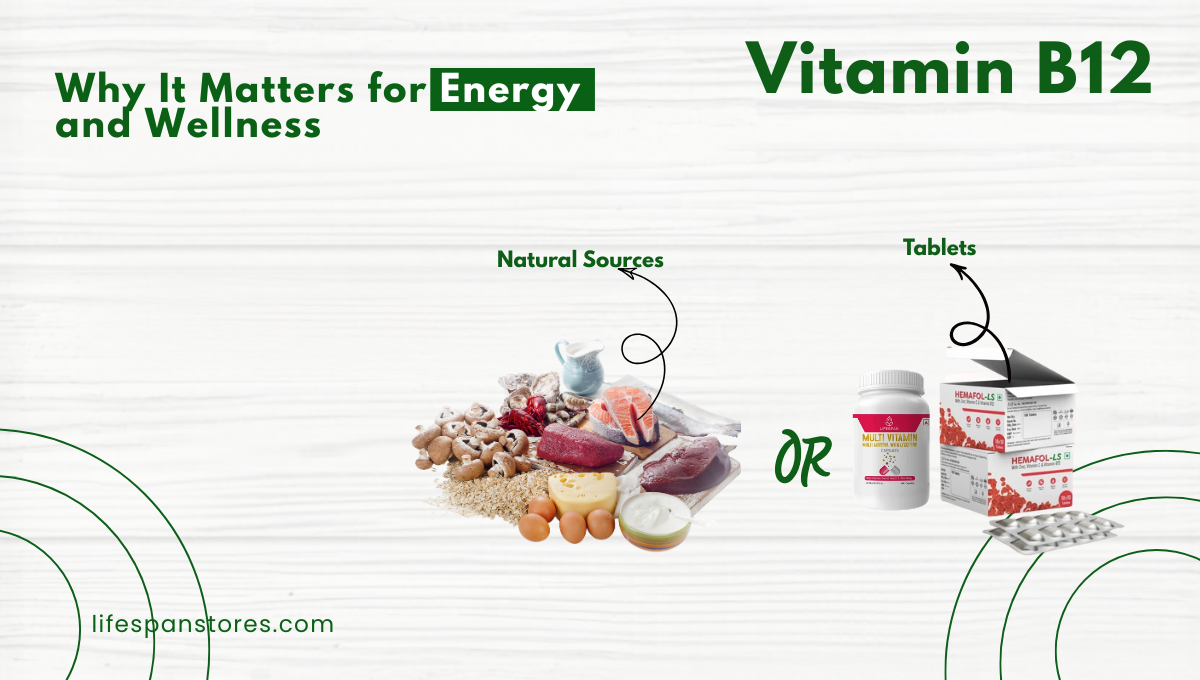
Vitamin B12 naturally occurs in certain animal-derived foods and is also available through fortified foods and dietary supplements. According to the NIH, vitamin B12 is found naturally in foods such as fish, meat, poultry, eggs and dairy products, while fortified foods can provide another source.
One interesting detail about B12 is that getting it from food is not simply about eating a B12-containing food. Absorption is also important. The digestive system needs to release B12 from food and ultimately absorb it through a process involving stomach and intestinal function.
This means that a person can have B12 in their diet but still experience inadequate B12 status if absorption is impaired.
Why Is Vitamin B12 Important for Energy?
The phrase “vitamin B12 for energy” is common, but it can sometimes create unrealistic expectations.
B12 is not a stimulant. It does not work like coffee, tea or an energy drink. Instead, vitamin B12 contributes to normal energy-yielding metabolism—the biochemical processes through which the body handles nutrients and supports its normal functions.
Vitamin B12 also contributes to normal red blood cell formation. Red blood cells contain haemoglobin, which carries oxygen around the body. When B12 deficiency causes certain types of anaemia, tiredness and weakness can occur. The NHS lists extreme tiredness, lack of energy and muscle weakness among possible symptoms of B12 or folate deficiency.
This is why adequate B12 intake is important—but it is equally important not to assume that every episode of fatigue means you need a B12 supplement.
Persistent tiredness can have many possible causes, including inadequate sleep, stress, insufficient calories or protein, iron deficiency, thyroid disorders, illness and other nutritional issues.
Vitamin B12 and Red Blood Cells
One of the most important roles of vitamin B12 is its involvement in normal red blood cell formation.
Red blood cells are responsible for transporting oxygen throughout the body. B12 works alongside other nutrients, including folate, in processes associated with the production of healthy blood cells.
When vitamin B12 deficiency becomes significant, the body can produce unusually large red blood cells that do not function normally. This can contribute to megaloblastic anaemia. The NIH notes that vitamin B12 deficiency can cause megaloblastic anaemia, which may make people feel tired and weak.
This connection between B12, blood formation and energy explains why B12 nutrition deserves attention when discussing everyday vitality.
Vitamin B12 and the Nervous System
Energy is only one part of the B12 story.
Vitamin B12 also plays an important role in maintaining a healthy nervous system. The NHS identifies keeping the nervous system healthy as one of vitamin B12’s important functions.
When deficiency becomes significant or remains untreated, neurological symptoms can occur. These may include:
- Tingling or “pins and needles”
- Numbness
- Muscle weakness
- Problems with balance or coordination
- Vision problems
- Changes in memory or understanding
These symptoms should not be self-diagnosed as vitamin B12 deficiency. They can occur for many different reasons and require appropriate medical evaluation. The NHS specifically recommends seeking medical advice if B12 deficiency is suspected because some neurological complications can become irreversible if deficiency remains untreated.
B12 and DNA Production
There is another reason B12 is essential: it participates in DNA synthesis.
DNA is the genetic material present in the body’s cells. Cells continuously need to maintain and reproduce their genetic material, making nutrients involved in DNA synthesis fundamental to normal cellular function.
The NIH Office of Dietary Supplements lists DNA synthesis among the important functions associated with vitamin B12.
So, although B12 is needed in relatively small quantities, its biological role extends well beyond simply “feeling energetic.”
How Much Vitamin B12 Do You Need?
Vitamin B12 requirements vary according to age and life stage.
According to the NIH, the recommended amount for most adults is 2.4 micrograms (mcg) per day. Requirements are higher during pregnancy and breastfeeding, while children and adolescents have age-specific requirements.
Life stage | Recommended B12 intake per day |
Children 9–13 years | 1.8 mcg |
Teens 14–18 years | 2.4 mcg |
Adults | 2.4 mcg |
Pregnancy | 2.6 mcg |
Breastfeeding | 2.8 mcg |
These are general nutritional recommendations, not individual supplement prescriptions.
Importantly, the amount a person needs to consume and the amount contained in a supplement are not necessarily the same. Supplements can contain substantially more than the daily recommended intake because absorption varies and different formulations are designed for different purposes.
Natural Food Sources of Vitamin B12
For many people, a varied diet can provide vitamin B12.
Common sources include:
Fish and seafood: Fish such as salmon and other seafood can provide B12 along with protein and other nutrients.
Meat and poultry: Meat and poultry are naturally occurring sources of vitamin B12 and can contribute significantly to daily intake.
Eggs: Eggs provide vitamin B12 and can be incorporated into breakfast, salads, sandwiches and other meals.
Milk and dairy products: Milk, cheese and other dairy products can contribute to B12 intake.
Fortified foods: Some breakfast cereals, plant-based beverages, nutritional products and other foods may have vitamin B12 added to them. Always check the nutrition label rather than assuming a product is fortified.
The NHS similarly identifies meat, fish, milk, cheese, eggs and some fortified breakfast cereals as sources of B12.
What About Vegetarians and Vegans?
This is an especially important consideration.
Vitamin B12 is not naturally abundant in fruits, vegetables or grains. People who follow vegan diets therefore need to pay particular attention to reliable B12 sources.
This does not mean that a plant-based diet cannot be nutritionally balanced. Instead, B12 needs to be deliberately included through fortified foods or an appropriate B12 supplement.
The NHS notes that people following vegan diets may not obtain enough B12 from food and may need supplements or fortified foods.
People following vegetarian diets should also consider their overall intake, particularly if they consume limited amounts of dairy or eggs.
Who May Be at Risk of Vitamin B12 Inadequacy?
B12 inadequacy can occur for different reasons. Dietary intake is only one possibility.
People who may need particular attention to B12 include:
- People following vegan diets: Because naturally occurring B12 is mainly present in animal-derived foods, reliable fortified foods or supplements become particularly important.
- Older adults: Changes in digestive function can affect B12 absorption. The NIH identifies older adults as one group that may be at increased risk of B12 deficiency or inadequacy.
- People with gastrointestinal conditions: Certain digestive disorders can interfere with B12 absorption. Conditions affecting the stomach or intestines may therefore increase the risk.
- People who have undergone certain gastrointestinal surgeries: Some stomach or intestinal procedures can affect the body’s ability to absorb B12 properly. The NHS specifically identifies certain stomach and intestinal conditions and surgeries as potential causes of B12 deficiency.
- People taking certain medications: Some medicines can interfere with B12 absorption or status. Examples include metformin and certain acid-reducing medications such as proton pump inhibitors.
This does not mean that someone taking these medicines should stop them. Medication decisions should always be made with a healthcare professional.
What Are the Possible Signs of Vitamin B12 Deficiency?
B12 deficiency can develop gradually, and symptoms may not always be obvious at first.
Possible symptoms include:
- Persistent tiredness
- Lack of energy
- Weakness
- Pale appearance
- Shortness of breath
- Headaches
- Loss of appetite
- Sore or red tongue
- Mouth ulcers
- Tingling or numbness
- Muscle weakness
- Balance or coordination problems
- Changes in memory or understanding
The NHS emphasizes that symptoms can occur with or without anaemia and that neurological effects can occur in B12 deficiency.
However, these symptoms are not proof of B12 deficiency. A healthcare professional can consider symptoms alongside medical history and appropriate blood tests.
How Is Vitamin B12 Deficiency Identified?
If a person has symptoms that suggest possible B12 deficiency, a healthcare professional may recommend blood testing.
According to NHS guidance, assessment can include checking haemoglobin, red blood cell characteristics, vitamin B12 levels and folate levels. Additional investigations may be necessary to identify the underlying cause.
This is important because simply taking a supplement without understanding the cause may not address an absorption problem or another underlying condition.
Should You Take a Vitamin B12 Supplement?
Not everyone needs a B12 supplement.
If you consume sufficient B12 through your regular diet and absorb it normally, additional supplementation may not be necessary.
On the other hand, supplements may be useful for people whose dietary intake is inadequate or who have been advised by a healthcare professional to supplement.
The NIH Office of Dietary Supplements recommends discussing supplement use with a doctor, registered dietitian or pharmacist, particularly when there are questions about individual nutritional needs.
Treatment for diagnosed B12 deficiency is different from general wellness supplementation. Depending on the cause and severity, healthcare professionals may recommend oral B12 or injections. The NHS states that treatment depends on the underlying cause, with some people requiring ongoing treatment.
Introducing HEMAFOL-LS from Lifespan
For individuals looking for a nutritional supplement containing vitamin B12 alongside other nutrients, HEMAFOL-LS with Zinc, Vitamin C & Vitamin B12 is one of the relevant products available from Lifespan Stores.
According to the Lifespan product information, HEMAFOL-LS combines vitamin B12, vitamin C and zinc. The product page describes vitamin B12 as contributing to red blood cell formation, healthy nerve function and energy metabolism. Vitamin C and zinc provide additional nutritional support as part of the formulation.
Explore HEMAFOL-LS with Zinc, Vitamin C & Vitamin B12 at Lifespan Stores
HEMAFOL-LS should be viewed as a dietary supplement rather than a treatment for a diagnosed medical condition. Lifespan’s product information recommends using the product according to the recommended usage and under healthcare-professional guidance.
For broader daily nutritional support, Lifespan also offers DAILY-LS Stronger Immunity & Vitality Multivitamin, positioned by the brand as a multivitamin for everyday wellness, immunity, energy and vitality.
Explore DAILY-LS Multivitamin at Lifespan Stores
The appropriate product depends on your individual diet and nutritional needs. A multivitamin should not automatically be treated as a substitute for a B12-specific product or medical treatment.
B12 Supplements: What Should You Check Before Buying?
If you are considering a vitamin B12 supplement, don’t choose solely based on the largest number printed on the front of the package.
Consider:
- The ingredient list: Check exactly what nutrients and forms are included.
- The serving size: Look at how much B12 is provided per recommended serving rather than just the amount per container.
- Other nutrients: Some formulations combine B12 with nutrients such as vitamin C, zinc, folate or other vitamins and minerals.
- Recommended usage: Follow the manufacturer’s directions rather than assuming that taking more will provide greater benefits.
- Your individual needs: A supplement that is appropriate for one person may not be necessary for another.
- Medical conditions and medications: If you are pregnant, breastfeeding, taking medication, have an existing medical condition or have been diagnosed with a nutritional deficiency, consult a healthcare professional before starting supplementation.
Can You Take Too Much Vitamin B12?
Vitamin B12 has a relatively strong safety profile, and the NIH notes that no upper intake level has been established because B12 has generally been considered to have a low potential for toxicity. However, this should not be interpreted as a reason to take unnecessarily high doses.
The NHS also advises following appropriate supplement guidance rather than taking excessive amounts.
More is not automatically better when it comes to nutrition.
Five Everyday Habits to Support B12 and Overall Wellness
Vitamin B12 works best as part of a broader healthy lifestyle.
- Eat a varied diet: Include a range of vegetables, fruits, whole grains, protein sources and healthy fats, along with reliable B12 sources where appropriate.
- Pay attention to dietary restrictions: If you follow a vegetarian or vegan diet, plan your B12 intake rather than leaving it to chance.
- Don’t ignore persistent fatigue: If you regularly feel exhausted despite adequate sleep and a balanced lifestyle, speak with a healthcare professional.
- Read supplement labels carefully: Check serving sizes, ingredients, recommended usage and warnings before purchasing or consuming supplements.
- Treat supplements as part of—not a replacement for—a healthy lifestyle: Good nutrition, adequate sleep, hydration, regular movement and stress management all contribute to overall wellness.
Medical Guidance: When Should You Speak to a Professional?
Vitamin B12 deficiency is treatable, but identifying it early matters.
Speak with a doctor or qualified healthcare professional if you experience persistent unexplained fatigue, numbness, tingling, weakness, balance problems, changes in memory or other symptoms that concern you.
The NHS advises seeking medical evaluation when B12 deficiency is suspected because some neurological complications may become permanent if deficiency remains untreated.
Likewise, the NIH Office of Dietary Supplements emphasizes that supplement information should not replace professional medical advice and recommends discussing supplement use with qualified healthcare providers.
Final Thoughts: Small Nutrient, Big Role
Vitamin B12 may be required in only microgram quantities, but its contribution to normal body function is significant.
From supporting normal red blood cell formation and energy-yielding metabolism to maintaining healthy nervous system function and participating in DNA synthesis, B12 is an essential part of good nutrition.
For most people, the foundation should always be a balanced and varied diet. Those who have limited dietary sources of B12, absorption difficulties or other risk factors may need fortified foods or supplementation.
Lifespan Stores aims to make everyday nutrition more accessible through products designed around different wellness needs. HEMAFOL-LS with Zinc, Vitamin C & Vitamin B12 is one option for people looking for a formulation that combines B12 with vitamin C and zinc.
But remember: feeling tired does not automatically mean you have a B12 deficiency. Nutrition should be personalized, and persistent or unexplained symptoms should be evaluated by a qualified healthcare professional.
Healthy energy isn’t about finding a quick fix. It starts with understanding what your body needs—and consistently providing it through balanced nutrition, healthy habits and informed choices.
Frequently Asked Questions About Vitamin B12
- Is vitamin B12 good for energy?
Vitamin B12 contributes to normal energy-yielding metabolism. However, it is not a stimulant. Supplementation is most likely to improve fatigue related to B12 deficiency rather than ordinary tiredness in someone who already has adequate B12. - Which foods contain vitamin B12?
Fish, meat, poultry, eggs, milk and dairy products are common sources. Some fortified foods, including certain breakfast cereals and plant-based products, can also provide B12. - Do vegetarians need vitamin B12 supplements?
It depends on the individual’s diet. People who consume very little or no animal-derived food may need fortified foods or B12 supplementation to maintain adequate intake. - What are common signs of B12 deficiency?
Tiredness, weakness, numbness, tingling, muscle weakness, balance problems and certain cognitive or neurological changes can occur. These symptoms can have many causes, so professional assessment is important. - Can vitamin B12 deficiency be treated?
Yes. Treatment depends on the cause. Healthcare professionals may recommend oral supplements or injections, and some people require long-term treatment when absorption is impaired. - Can I take vitamin B12 without a blood test?
Some people use B12 supplements because their diet provides limited B12, but whether supplementation is appropriate depends on individual circumstances. If you have symptoms or suspect deficiency, consult a healthcare professional rather than self-diagnosing. - Is vitamin B12 found in fruits and vegetables?
Naturally occurring vitamin B12 is not generally found in fruits, vegetables and grains. People following plant-based diets should therefore look for reliable fortified foods or supplements. - Does vitamin B12 work immediately?
Not necessarily. If someone has a deficiency, improvement in symptoms can take time. The NHS notes that symptoms such as tiredness and lack of energy may take weeks to improve with treatment. - Is HEMAFOL-LS a medicine?
No. Lifespan describes HEMAFOL-LS as a dietary supplement containing zinc, vitamin C and vitamin B12. It is not intended to diagnose, treat, cure or prevent disease. - Should I consult a doctor before taking a B12 supplement?
If you have persistent symptoms, an existing medical condition, take medication, are pregnant or breastfeeding, or have been diagnosed with a deficiency, professional guidance is recommended. The NIH specifically advises discussing dietary supplements with qualified healthcare providers.
Medical Disclaimer
This article is intended for general educational and wellness information and is not a substitute for diagnosis, treatment or personalized medical advice. Vitamin B12 requirements and supplementation needs vary between individuals. If you suspect vitamin B12 deficiency or have persistent symptoms, consult a qualified doctor, registered dietitian or other appropriate healthcare professional. Always read the product label and follow the recommended usage. Lifespan’s own terms similarly state that its nutritional products are dietary supplements and recommend professional consultation, particularly for people who are pregnant, nursing, taking medication or living with an existing medical condition.
[…] fruits and vegetables provide different vitamins, minerals, fibre, and naturally occurring plant compounds. Instead of focusing on one so-called […]